Naples, before anything else.
I was born in the historic center of Naples, on a street called Rua Catalana. We started with very little.
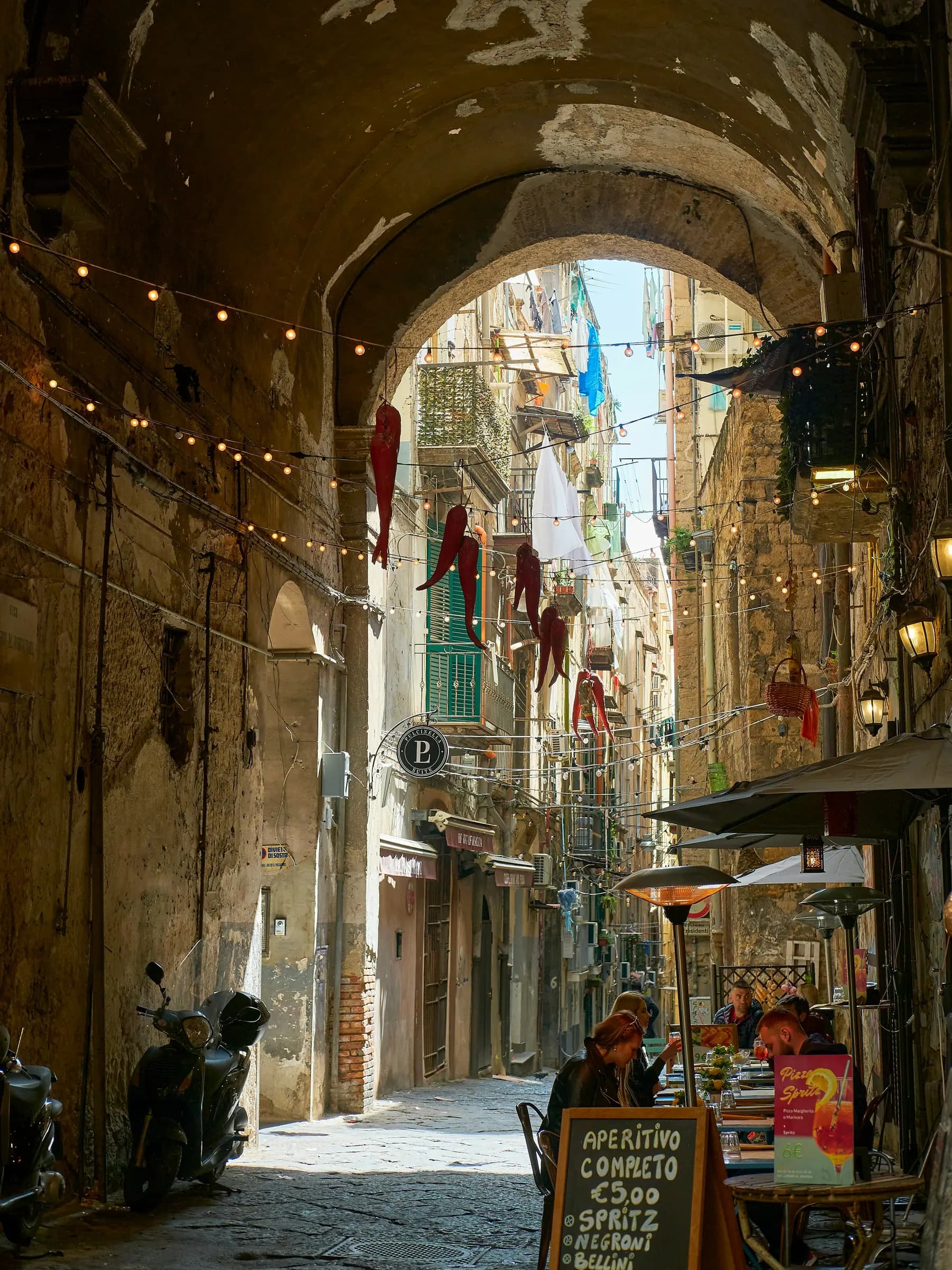
The historic centre of Naples today. Photograph by Riccardo Tuninato.
From the historic center of Naples to a $30 million build in Oklahoma, in order.
My road to $1 billion.
I want to become a billionaire, and I am not going to pretend there is a deeper meaning in it. It is a number I like and it is how I keep score. What I am actually after is building businesses that matter and unlocking the next level, in wealth and in the business itself.
Finance, stocks, deals, marketing, sales: to me it is all one game, an endless puzzle with no final level. Every deal is a new board. Every business is a position. The park in Oklahoma is the current move, not the last one.
This site is me solving the puzzle in public, one decision at a time, with the numbers left in.
The story
I was born in the historic center of Naples, on a street called Rua Catalana. We started with very little.
The historic centre of Naples today. Photograph by Riccardo Tuninato.
Naples at the time was violence driven, and organized crime recruited poor kids directly, all the time, because poor kids were easy to recruit. My mother is a strong willed Catholic and she decided her kids were going to get a better life, so at eleven I was in the United States.
From then to age twenty we moved at least 35 times: Utah, New York, Florida, Texas, Arizona, a couple of months in Seattle. The longest I ever stayed in one home was about a year and a half.
I bussed tables in Coral Gables. I sold makeup on the street in New York. One peak season I delivered packages for USPS out of Westbury, Long Island, anywhere between 12 and 14 hours a day in the snow, and I had one pair of shoes, so I put plastic bags inside them and kept going.
That stretch is when I fell in love with learning, and from about 17 or 18 it was finance on a technical level. Value investing first, The Intelligent Investor and Security Analysis, then further and further into the books almost nobody reads: Klarman, Greenblatt, the Buffett partnership letters from before Berkshire was Berkshire, and the free Bridgewater research I downloaded to my phone every week before they cycled it out.
I started at a small Long Island broker dealer, cold calling straight out of the phone book and then out of Dun and Bradstreet lists. From there I went to one of the biggest brokerages in the country, got my Series 7, 63 and 66, and worked my way up from customer service to the desk serving 401(k) clients in about a year and a half.
At the tail end of that run I house hacked my first place in West Valley, Utah. Bought it for about $300,000, sold it for about $400,000 a year later, right before COVID.
Enterprise SaaS was probably the darkest time for me: startups with very big valuations, very little revenue and no real product-market fit, money to burn and not a lot to show for it.
What it taught me is that creating something nobody has ever created is a 1% game, because most of the time the reason nobody built it is that nobody wanted it. The winning play is acquisition and augmentation: take a concept that is already working in one industry and bring it into an industry that has never seen it, where the market already exists.
I became a consultant for developers: negotiating for land, navigating the build, and raising money in ways that did not cost the developer his own company. The standard path leaves a founder holding 5% to 10% of the thing he envisioned and built. I got very good at the niche structures that keep the majority in his hands: EB-5, opportunity zones, tax-heavy investments, asset recategorization, restructuring.
The property was called MidAmerica Outdoors. It was an off-road riding and racing park in Jay, Oklahoma, and it had been one for years.
Everything a guest could want was already sitting on it. The revenue did not agree.
By infrastructure, not acreage, it was the biggest property in Delaware County, and I bought it.
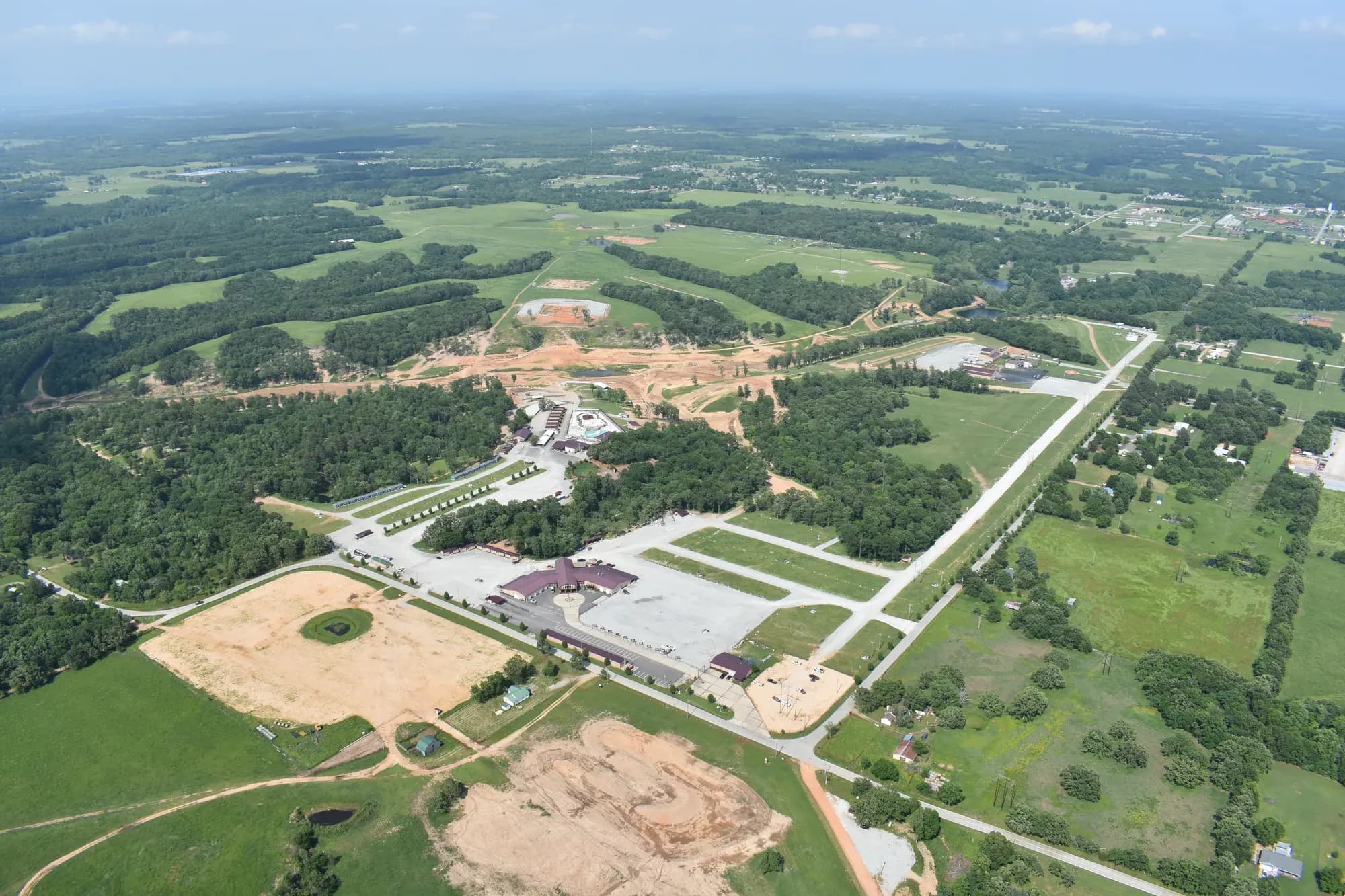
What that move produced is measured below, move by move.
Almost everything I have taken on looked like a problem before it looked like an opportunity, which usually means an asset with plenty of activity on it and not much revenue, priced at a number nobody wanted to pay, sold to a customer who was never going to pay it anyway.
The four moves are find the deal, structure it, build the marketing and sales engine, and then sell premium, and the order matters more than any single one of them, because running them out of sequence is how people end up marketing something they never structured properly.
Hospitality is the arena I happen to be running that play in right now rather than the thing I do. If the next one is a building in Dallas or a lodge in Michigan the four moves do not change at all, only the dirt does.
An asset is worth roughly what it earns. So the only assets worth my time are the ones where what it earns is wrong.
Underused land. A season that runs four months when it could run ten. A building priced as a building when it could be sold as an experience.
Before I get interested, the audience has to pass three tests. Is the problem a need to have and not a nice to have. Can the buyer pay, and will they. And is anyone actually serving them, or does something stop everyone else from trying.
When the thing stopping everyone else is a taboo, that taboo is the moat.
Anyone can agree on a price, and in my experience the price is the easiest part of a negotiation to settle. The money gets made in everything that happens after it.
Who controls the decisions, what happens when somebody wants out, how the asset gets valued and who picked the person doing the valuing, how long the hold runs, and what gets bought back at what number and on whose terms.
I draft that structure myself before a lawyer touches it, because whoever writes the first version sets the default, and the default usually survives.
In six and a half months, organic video for the resort did 136.8 million views and reached 93.5 million people.
People hear a number like that and file it under vanity, and I would too if it were not sitting on the cost line. Every one of those views is inventory I did not have to buy, and it is most of the reason the paid side works at all in the months we actually spend.
None of it is clever, and that is deliberate, because the clever version has tested worse every single time we have tried it. We show the real thing, we say the real number, and then we do it again the following week.
The repositioning took the property from $1.5 million to $6 million in twelve months, which is four times the revenue on the same ground.
Nothing physical changed in that window and I want to be clear about it, because people assume we must have built something. What changed is who we were selling to and what we were selling them.
The old customer already owned a machine and could get most of the experience free on public land, so we were competing with free and we were losing. The new customer could not get it anywhere at any price without two months of planning and six different vendors, and that is somebody who is already frustrated and already able to pay.
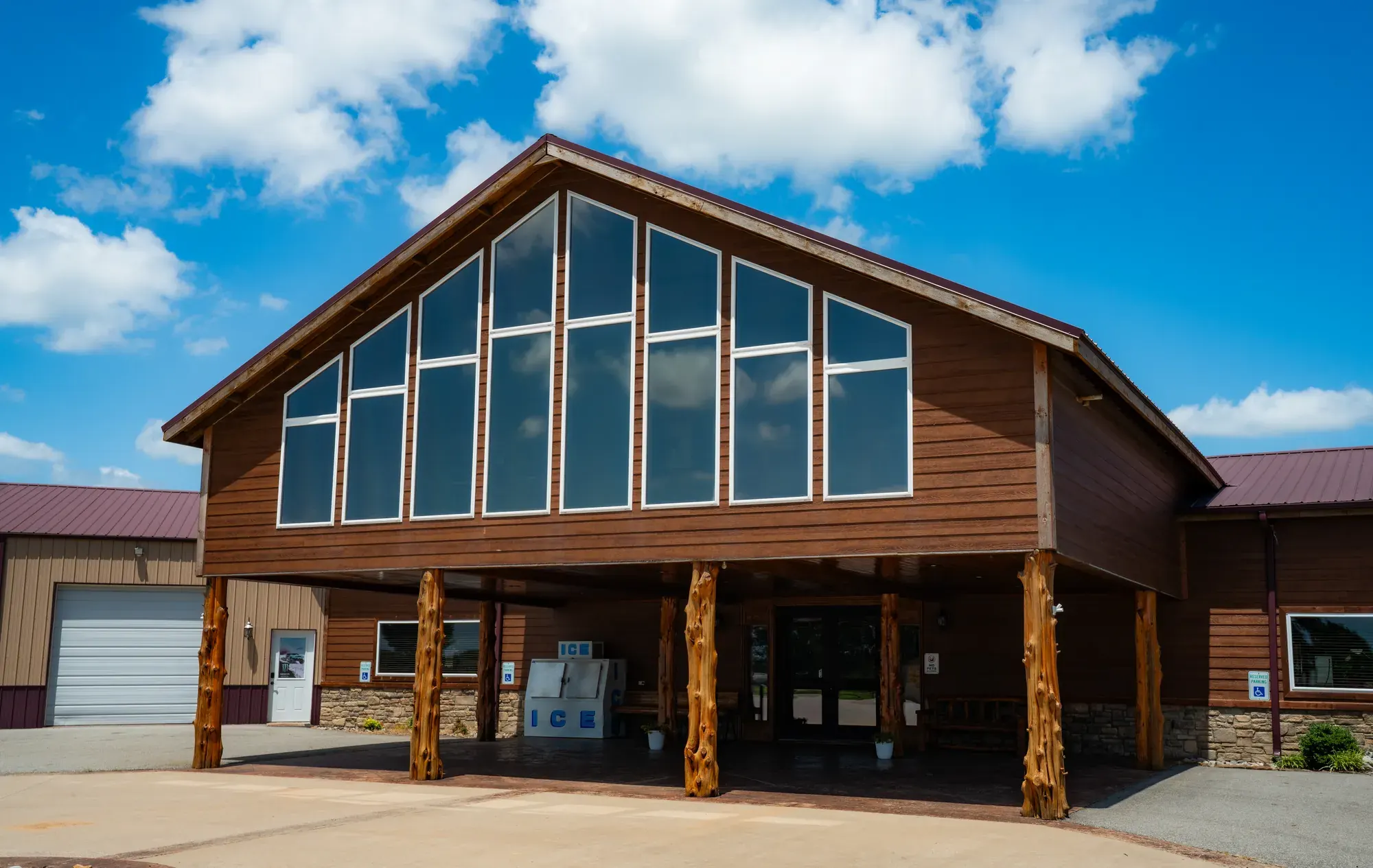
America's Outdoor Adventure Park, in Jay, Oklahoma, which is all-inclusive cabins and trails and side by sides and a kitchen that is not an afterthought.
There are 380 RV pedestals on the property right now. They are coming out, and 30 cabins are going in where they stood.
That one decision is the whole thesis in miniature, because the pedestals were infrastructure and the cabins are cash flow, and an asset is worth what it earns rather than what happens to be sitting on it.
The video series is called Million Dollar Mistakes I Made Building My $30 Million Resort. Sixty seconds each, one mistake per video, with the number attached.
Hiring from the bottom up instead of the top down. Marketing to a customer who was never going to pay. Spending capital on the thing that looks like value instead of the thing that produces it.
I publish them for one reason. Everybody in this business posts the finished photo. Almost nobody posts what the lesson behind it cost, and that is the only part that is useful to anyone else.
Deals, partnerships, and capital conversations about the current build.
Not consulting. Not coaching. Not mentorship calls. If you want the method, it is in the newsletter and the essays, free.
One decision, the number it cost, and the rule I kept. Nothing else in between.
Every new piece I write, sent to your inbox.